

If I was stranded on an island with a guitar and the choice of only one guitar pedal, it would probably be the Roland Space Echo (…and the Boss Pitch Shifter PS2 please!).
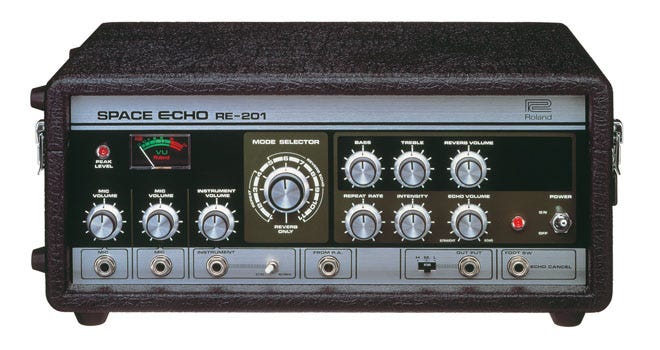
The Roland RE-201 Space Echo is a tape loop, three playback heads, a spring tank and a small motor - and one of the most recognizable sounds in recorded music. The modern RE20 version was a staple in my tour rig for my band - menwhopause and on featured on songs like Can’t We Be Dreaming
I was missing my Space Echo today and since everyone’s raving about Claude and its coding powers, I wondered if I could create a digital version. So I started where the machine actually starts: the service manual.
This service manual is an unusually honest document. It isn’t marketing - it’s the drawings a technician needs to make the thing work again. Block diagrams, circuit schematics, mechanical tolerances, and a table of every adjustment with the exact voltage it should read. If you want to know what a device does, the repair notes tell you more than any review ever could.
I browsed through the manual and then gave it to Claude and asked it to analyse it and code it for me. It took about an hour with some iterations to nail this. Click on it to check it out.

What makes the Space Echo truly special is that the delay is physical and relies on a number of things coming together. Like inside a tape recorder, a motor pulls a continuous loop of magnetic tape past a recording head and towards three playback heads. So your guitar signal gets recorded onto the tape and then gets played at each of the playback head. This is what creates the echo and the delay is created by the distance between the heads - the slower the tape moves, the larger the echo. The intensity controls the feedback which means that part of the playback sound goes back to the recording head and is recorded again on tape. This becomes a loop so every repeat means the tape has made a journey through the tape heads and back.
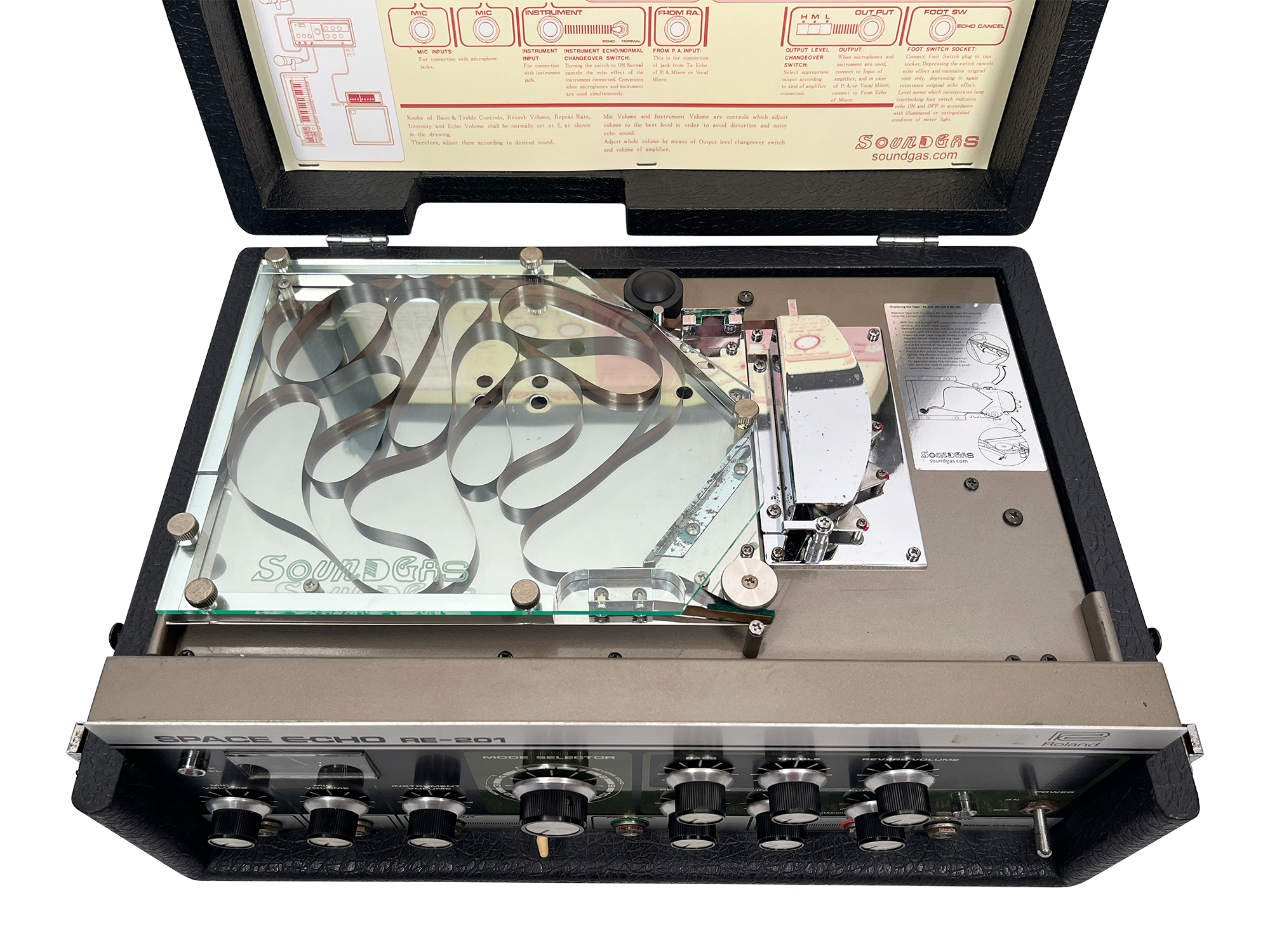
This “dirty” sound is what makes the pedal so special. The tape can lose its elasticity, it stretches, the heads can lose frequencies, the speed can wander and every one of these imperfections finds its way into the tape making it truly unique.
With digital pedals, you can programme a delay to milliseconds but the result is the same every time. It’s flawless but boring.
It’s the imperfections that made the original RE201 what it was. Much like us humans.
Nice one!